Cart 0


Established in 2016 in London, Klub Verboten has become a pioneer in providing contemporary sex-positive spaces, dedicated to the spatial, sonic, and visual exploration of BDSM and fetish practices. Each of their parties delves into the complexities of modern physical interactions, attracting a diverse crowd that spans the entire spectrum of human experience. Verboten explores how people engage with each other, driven by their sexualities. Their parties celebrate experimentation and expression with the belief that new forms of connection and resistance will emerge. Setting the gold standard in safeguarding, Klub Verboten is committed to creating a space that prioritizes safety and consent while fostering a vibrant and inclusive community.
To learn more about the Klub Verboten community — how it began, what happens at their parties, and how newcomers like us can get involved — we interviewed its founder, Karl.
How did you come to organize fetish parties?
I’m from a small village in East Germany, and even there, we had a BDSM club. The kink scene and sex are omnipresent all the time, everywhere. It’s almost forgotten that there’s a rich history of BDSM, fetish, and kink culture, and most things have been done already to an absolute extent in terms of creativity and craftsmanship. That’s the opposite of perceiving kink just as your online retailer, whatever your local shop’s name is. I think pre-Verboten kink was just ‘nah’ on all levels, on all aspects. And we started stripping it down. Someone had to do it. The opportunity was available. We kind of rolled into it, and then we just stayed around.
To be honest, our initial intention was simply to host “private parties” for a few friends. There was no mega agenda of saving the world or changing social-political issues, as raves apparently do these days. However, we had to mature very quickly after the first and second events and take responsibility as we understood what a fragile and very complex environment it was.
What led to your transformation from these small parties to being one of the leading kink events in the world?
It was the fear of what could potentially happen. All these freedoms that we have at our events come with great responsibility to prevent harassment or sexual assault. They come with a set of rules that all participants have to hear and agree to. Acknowledging the severity and the presence of that made us change as humans. It made us implement numerous safeguarding measures, ultimately putting us at the forefront of all these questions. I believe, as a society as a whole, there’s still a long way to go in addressing issues such as sexism, gender imbalances, sexual violence, and so on. Hosting our events provides us with the opportunity to address these concerns and, at least locally, create a world that we feel a little bit happier with.
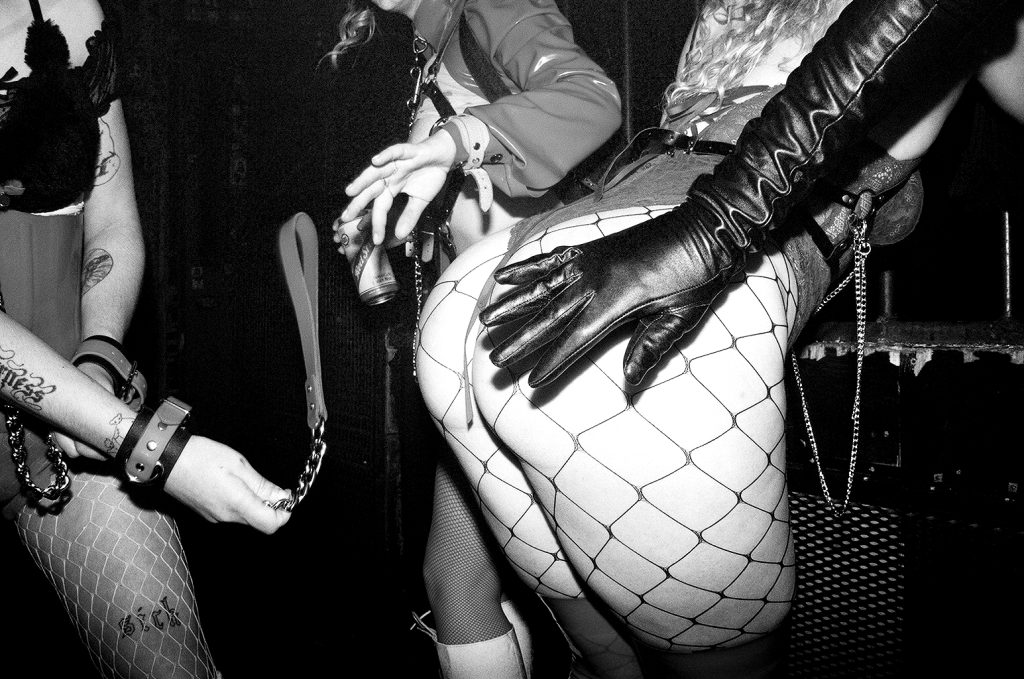
When you mention fetish and BDSM, the first things that come to people’s minds are latex and leather outfits. What’s the role of fetish aesthetics in your community, and how important is it in general?
The aesthetic doesn’t matter so much; it’s more about the expression that the outfit delivers. I believe garments and the way we visually express ourselves indicate the time and effort of thought processes that one puts into this, or not. Ultimately, your outfit will reveal whether you naturally belong there, want to belong there, or are just there for minimum effort.
What are the most important rules one should understand before going to your party? Can you guarantee that the people who come to the KV party will be safe?
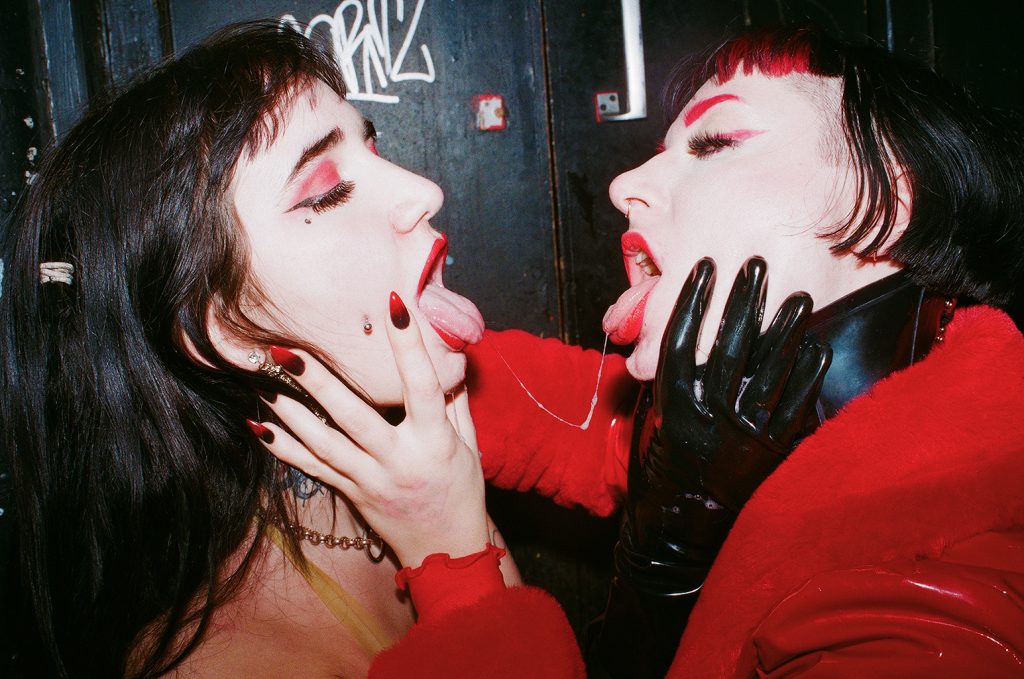
I’d say that retaining personal space and respecting sexual consent are probably the most important things. We need people to understand what an invasive move it is to stick something in another human’s body. That’s why we ask all attendees to comprehend and adhere to our 15 club rules. These rules are complex, requiring time to understand and apply within the context of the event. Thanks to our rules, today thousands of people find it natural to communicate, ask for consent, retain personal space, and not do out-of-the-blue, horrible things to each other.
So, firstly, we have these rules, and as a second layer, we have our safeguards — highly trained welfare officers. There are 60 of them, having undergone several training and accreditation programs. They are there to prevent issues and step in when needed. This approach is fairly unique in terms of scale and capacity here in Europe.
How does your safeguarding team keep an eye on people having all sorts of sexual experiences without disturbing them? How do they control things that are supposed to go out of control without making people feel uncomfortable?
What’s interesting about these situations is that they may appear out of control, with people letting loose, but they are quite the opposite. In the BDSM context, a submissive person is very much in control, opposing a dominant person. What could impose more control upon a submissive person than that kind of freedom, right?
What we do is only step in when this balance is disrupted. The people who work for us are super friendly. Most of them come from the scene. They are highly experienced practitioners who observe a narrative or story, intervening only when necessary. For example, some people may have negotiated to hit each other with an aluminum baseball bat. Sounds frightening, right? But if it’s negotiated, and they all consent to play that game, it’s fine. However, it becomes problematic if there is no agreement, particularly when someone exposes their genitals without consent. Sadly, the penis is involved in 99% of all sexual assaults. In situations where people have not explicitly consented to such actions, our intervention is necessary, as it becomes essential to ensure that personal boundaries are respected.
How do you select and train the members of your safeguarding team? Is anyone eligible to join it, or is there a special pre-selection?
Ultimately, what we’re looking for is a kind of decent and humble human being who can handle that responsibility. Of course, we have people from the scene, but we also seek individuals who have the mental capacity to provide assistance, support, and help people. In other instances, we want them to be part of this scene and contribute to a very healthy ecosystem.

Can you tell us a bit about the club’s aesthetics? What cultural phenomena inspired them? What types of art do you mostly showcase at your parties?
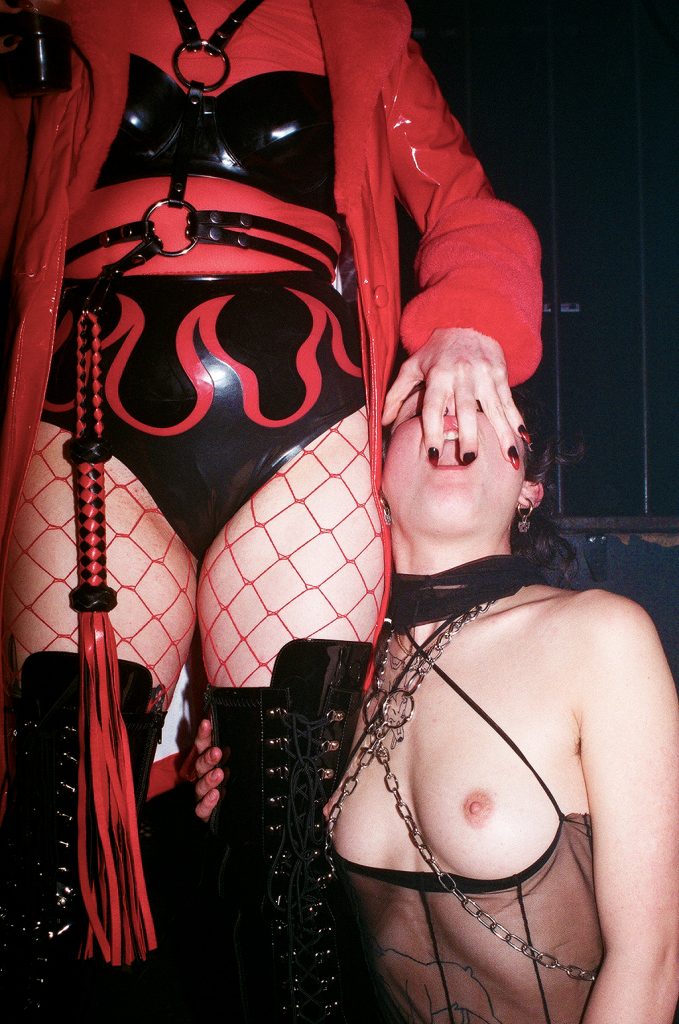
I think pre-Verboten, kink was just something super ‘nah.’ It felt like a description from Amazon that got it entirely wrong and kind of dated back to the nineties. It was a highly sexist, male-centered, flesh-colored environment. Everything about it was just wrong and horrible. In our community, kink is integrated into all our senses. The idea was to shape something that had smoother, polished, and shiny edges and was a little bit more monotone in lighting scenarios and so on.
Beyond that, we reached a point where we started involving media artists and working with more responsive environments. Some might call it immersive. We would build something and be around in the event space with tablets and phones, saying, ‘Hey, press this button and see what happens.’ We installed media sensors in the walls of a space with around 800 people or so in a room. We worked with sensory equipment, using audio or video inputs and assigning them to certain triggers, like lighting and projection scenarios, and so on. We were keen on anything that was a piece of technology that could somehow be used. We just put it in and used it. Once, we even used so-called ‘abused scanners’ that we dashed around for people to scan parts of their bodies. That’s something that came our way, and we tested it on living subjects.
How would you describe the layout of the club to those who have never been there? What dance floors and areas do you typically have?
Play spaces, play spaces, play spaces, and more play spaces. There’s also a dance floor and a hangout area. Actually, we need more play spaces, but we don’t have the extra space for them.
Have you ever had any problems with the police, state, and especially religious people because of your parties?
We had this chat with the police and the authorities lately, and we all agreed that the myth exists and gets cooked up by one council or one local official or one resident who says, “Oh yeah, there are lots of religious people in the area.” But based on the actual research data from a professor at King’s College, the reality is that in Australia, Germany, or the UK, wherever there are sex spaces, fetish events, strip clubs, and so on, residents are aware of them, but the majority of the research results show that they just accept it as what they are. During our conversation, a local politician was so nice to say, “Yeah, we had a leather bar down the road in the dingy alleyway, and the residents facing the entrance of that Gayman leather bar were very happy about it because on the way home, A, there was light, and B, there was always a very big, strong fellow in leather gear outside, so the residents felt that they were safe on the way home.”
Obviously, in the beginning, people didn’t like the idea of having a sex party around the corner. However, as they realized that we genuinely care about people and prioritize education, their perception changed. Now, they’re willing to work with us, trusting in our commitment, as well as the owners’, to support people and ensure their safety.
How did you receive support from Arts Council England, and what does it give you?
We went through the application process: we failed on the first attempt, but we succeeded on the second one. Probably, the first time, we wrote something that came a little more from our hearts in a very desperate moment during the Corona times, but we were super lucky when we got it the second time. We also received a tiny bit of money, which we immediately spent on the production of events. However, the most important thing for us was that someone working at Arts Council England felt that we were a part of Britain’s culture worth preserving.
What impact do your parties have on people in terms of sex education?
I’m not sure if I want to be seen as a sex educator because education is a bit of a longer process than 8 hours, seeing me intoxicated in a dark room. However, with our house rules, we aim to equip people with a little more decency, ethics, and understanding of how to navigate life in these spaces. If there’s one thing we hopefully bring across, it’s encouraging a bit more self-criticism about one’s actions.
We can see from our friends that it has changed the way they view sex and how they approach it in their lives. Knowing the Klub Verboten House Rules has altered the way they communicate with each other. They are much more careful, not just during afterparties but in real life as well, because they know these rules by heart. It’s beautiful to see how it’s influencing the community, not just within Klub Verboten.
What kind of advice can you give to newcomers? What should potential attendees learn to navigate your community easily?
I always advise newbies to come, have a drink, and hang out in the space. That is an ideal scenario for a new member. The first couple of times, you don’t even want to play or engage in anything; you just want to hang out, make some friends, have some conversations, and leave it there. Many community members are super open about skill-sharing. It’s more of an approach like in bouldering and climbing, where people can share tricks at a non-competitive and very social level. I think that the BDSM scene is very comparable to that. So, pace yourself; don’t try to have sex with someone. Discourage that idea; go and chat up the first 50 people you meet. Try not to have sex with someone. I really mean it.

How would you describe the people who come to your parties? How old are they? What do they do? What interests them in life? How do you see your audience?
I think that people who attend Verboten come from all walks of life. We have a full palette of human experience. If we allow someone to enter a space with thousands of our naked friends, we need to make sure it’s going to be safe for everyone — both for those we let in and for the people who are already in that space. Safety is the only thing we prioritize. We only care about safety. Anyone who doesn’t have a subscription to Andrew Tate’s channel is very much welcome.
How can one become a member of Club Verboten, and what are the main differences between members and non-members?
Speaking of data, I’m pretty sure it’s much safer to date a Klub Verboten member than a non-member. People with membership can gain faster entry because we don’t have to vet them. They won’t be turned away at the door. They also gain access to a more intimate member’s playroom and the event’s photo gallery. Additionally, they receive discounted tickets and invites to small events exclusively for members. Again, all this is in place because we prioritize safety and want everyone to have a good time; we just take a little more precaution.
Aside from your members-only special events, I’ve also heard about the second party you’re hosting called Tears for Beers. What is it about?
Tears for Beers is our midweek evening social event with no dress code. While there might be some play and separate rooms, it’s primarily an event we created to break the ice, allowing community members to meet and engage in conversations. It serves as a platform for members to ask questions and ease into embracing this new social landscape.
These events have taken on a life of their own. Picture a large and busy bar space with five, six, seven, or eight hundred people, all engaged in conversations. Topics range from everyday activities like doing laundry to how it feels to double-fist somebody. Newcomers can also exchange ideas with established members, encouraging them to come in and ask questions. We don’t position ourselves as large educators; instead, we rely on our community members who have been with us for a long time, growing alongside us over seven years. This, in turn, shapes our entire community, allowing it to develop organically.
What events are you planning right now?
We’re hosting one small event in December, and after that, we’re excited to move on to our new venue in Kreuzberg. As for January, it’s going to be a surprise!