Cart 0

Experience the transformative power of Fiber Art through the extraordinary works of Colombian artist Olga de Amaral. From October 13, 2023, to February 25, 2024, the Fondation Cartier in Paris hosts a landmark retrospective, the first-ever exhibition in France dedicated to Amaral’s monumental and luminous creations.
As a leading figure in Fiber Art, Amaral’s work bridges craft and contemporary art, creating a profound dialogue between tradition, material, and abstraction. This retrospective offers visitors a rare chance to immerse themselves in a world where fibers transcend function, becoming vehicles for light, emotion, and storytelling.
What Is Fiber Art?
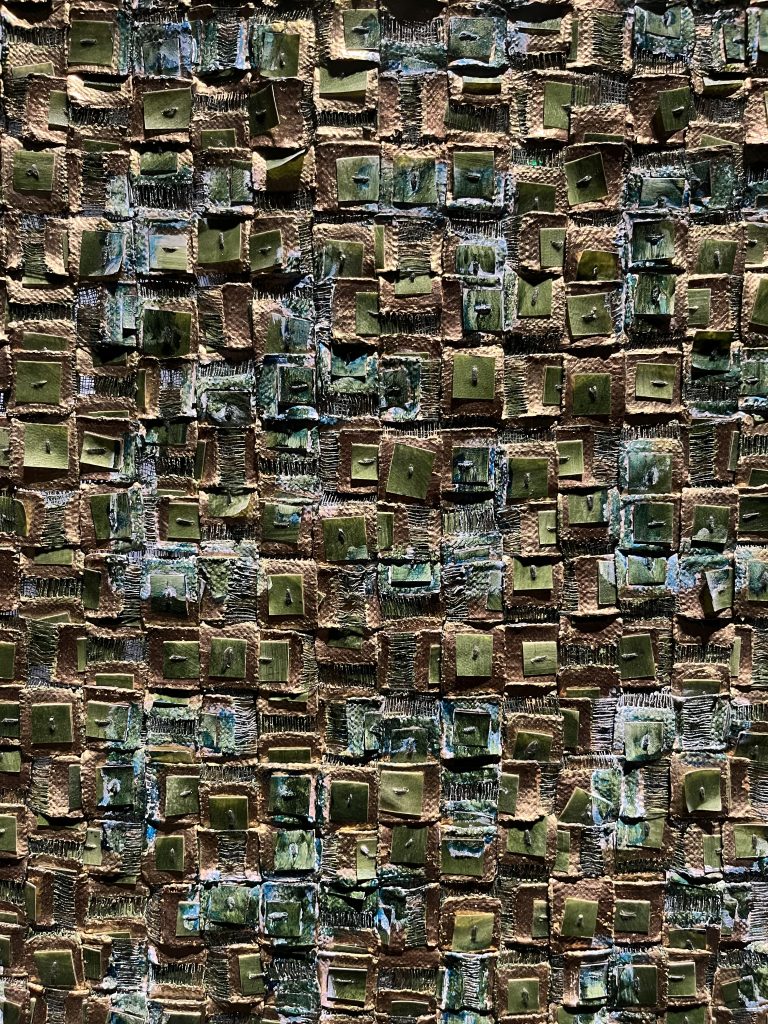
Fiber Art is a genre of contemporary art that transforms textiles into an expressive medium, expanding the boundaries of traditional weaving and craft. Originating in the mid-20th century, it reimagines fibers as a tool for creating abstract, sculptural, or conceptual works. Far from being merely functional, Fiber Art captures the essence of modern creativity, blending innovation, materiality, and narrative.
Olga de Amaral is a trailblazer in this field, celebrated for her ability to reimagine weaving as an art form that incorporates elements of painting, sculpture, and installation. Her mastery of materials like gold leaf, cotton, and acrylic elevates textiles into radiant works of art that challenge our perceptions of light, space, and texture.
Amaral’s Place in Fiber Art History
Amaral’s practice builds upon the innovations of early Fiber Art pioneers. Lenore Tawney (1907–2007) was one of the first to use weaving as a medium for abstraction, crafting monumental, sculptural installations in the 1950s and 1960s. Similarly, Sheila Hicks (b. 1934) transformed Fiber Art in the 1960s with her vibrant, tactile works, emphasizing the emotional and sensory potential of fibers.
In Japan, Junichi Arai (1932–2017) revolutionized Fiber Art from the 1970s onward by integrating metallic and synthetic materials, creating shimmering, reflective surfaces that challenged the limits of textiles. In contrast, contemporary artists like Aiko Tezuka and Klaas Rommelaere bring fresh perspectives to Fiber Art. Tezuka’s unraveling textiles explore historical and cultural narratives, while Rommelaere’s embroidered installations combine personal and collective storytelling with bold, dynamic visuals.
Amaral’s works, which bridge these historical and contemporary approaches, stand out for their ability to evoke landscapes of memory, spirituality, and transformation.
A Landmark Exhibition in Paris
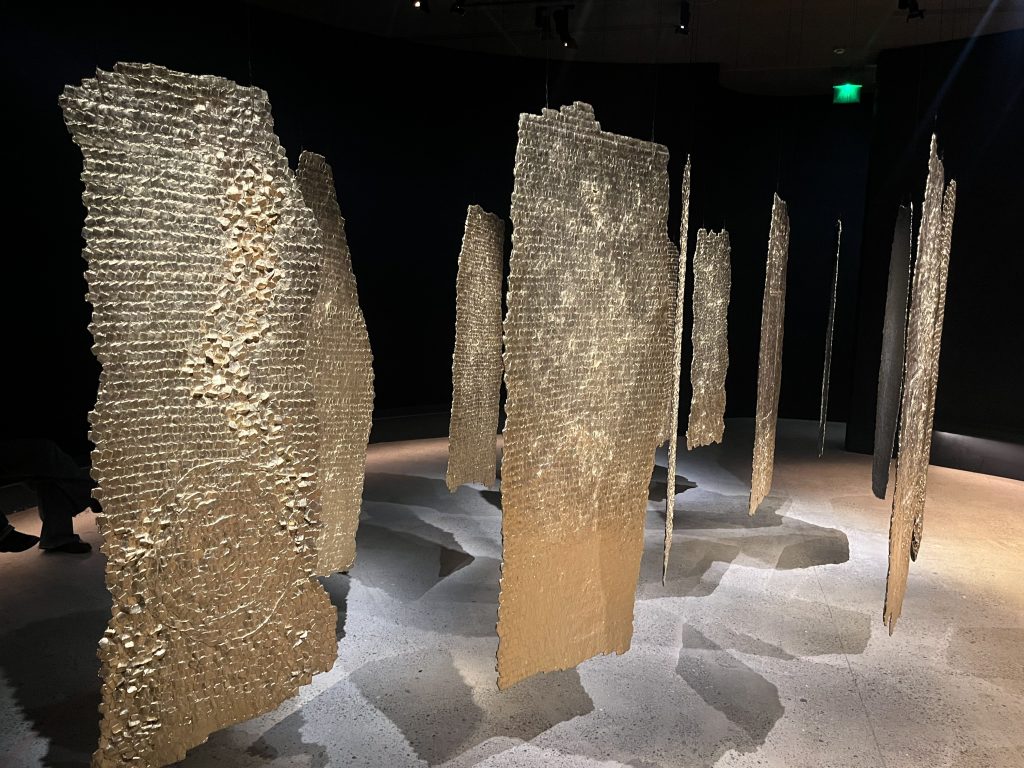
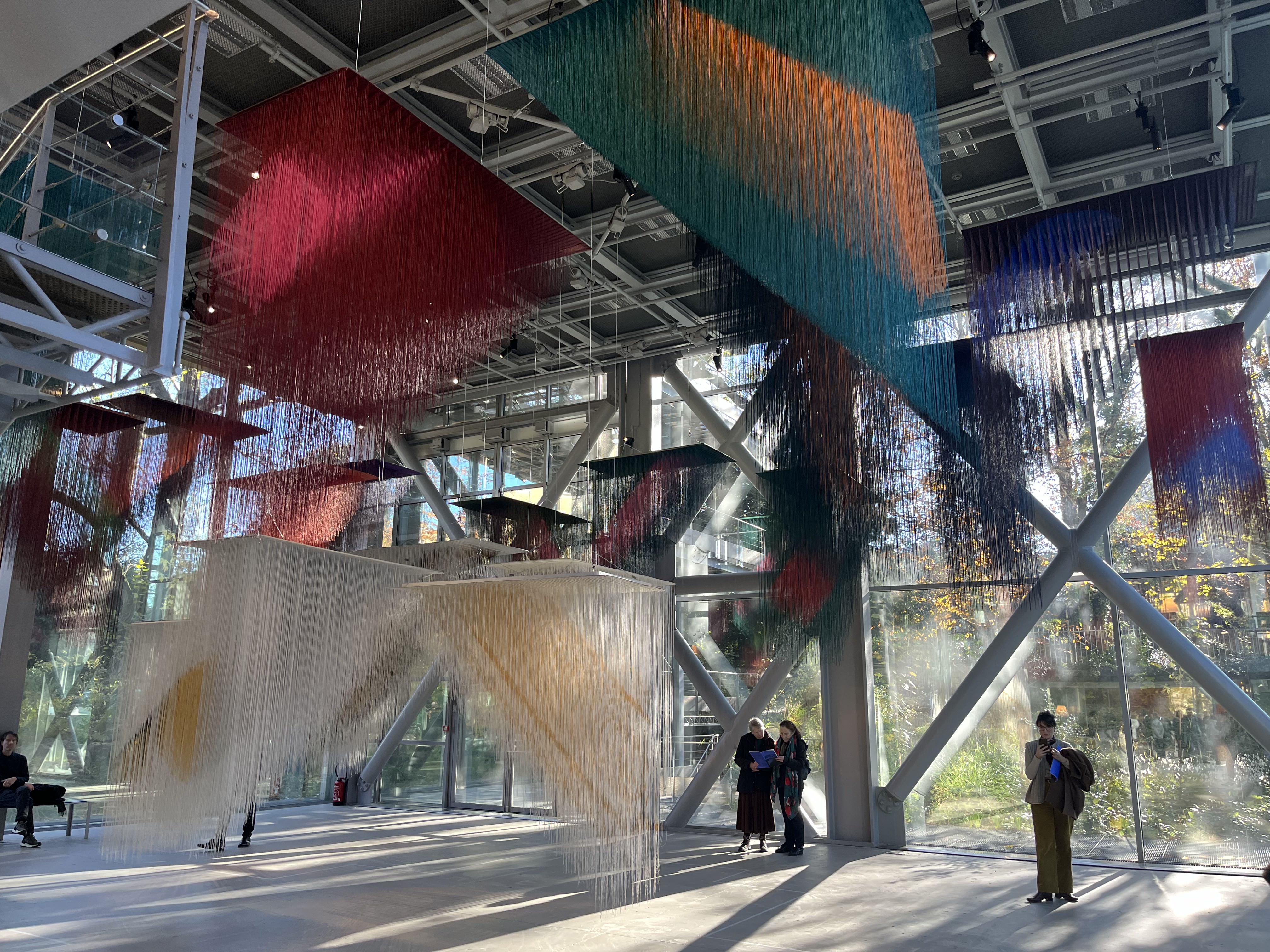
The retrospective at the Fondation Cartier features over 100 of Olga de Amaral’s most iconic works, many of which are being shown outside Colombia for the first time. Highlights include her renowned “Estelas” series, luminous steles gilded with gold leaf that interact with light in captivating ways, and the ethereal “Brumas” series, where layers of woven fibers evoke the ephemeral beauty of mist and clouds.
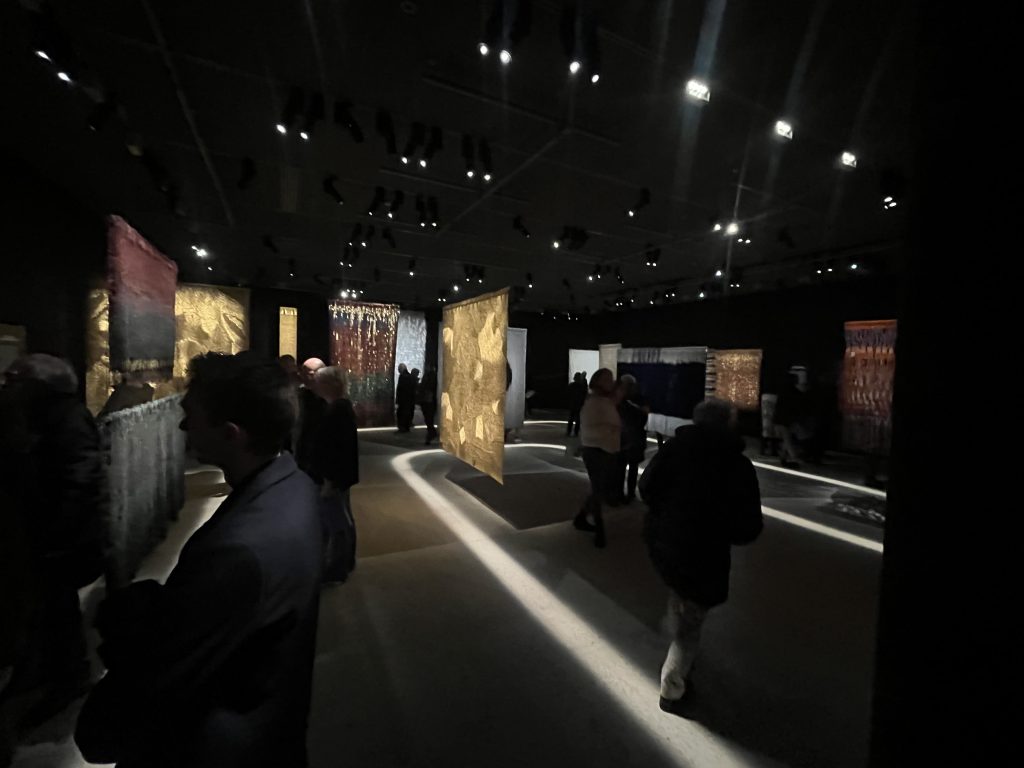
The exhibition design enhances the immersive nature of Amaral’s art. Visitors will navigate a space transformed by suspended installations and expansive layouts, offering an intimate encounter with the depth and scale of her vision.
Fiber Art Today
Fiber Art has historically been marginalized as a craft, but artists like Amaral have elevated it into a dynamic and respected genre within contemporary art. Her works, alongside those of Tawney, Hicks, Arai, Tezuka, and Rommelaere, demonstrate the power of fibers to convey light, texture, and profound emotional resonance.
The recent inclusion of Fiber Art in major institutions such as MoMA and Tate Modern signals a growing recognition of its cultural significance. This retrospective solidifies Amaral’s role as a key figure in the movement, highlighting her ability to transform textiles into sublime expressions of art.
For art enthusiasts and newcomers alike, this exhibition at the Fondation Cartier offers an unparalleled opportunity to experience the richness and innovation of Fiber Art through the lens of one of its most influential artists.
Why Feature This Exhibition on Haize.art?
At Haize, we are committed to showcasing art that challenges conventions and celebrates the transformative power of materials. Olga de Amaral’s work is a testament to this ethos, seamlessly blending tradition and innovation to redefine what art can be. By featuring her retrospective, we continue our mission of connecting audiences with extraordinary art that transcends boundaries and inspires dialogue.