Cart 0
Alternative lifestyles series : The spiritual journey and self discovery trip of Daniella Martins

Different people, different lifestyles – and certainly not an ordinary life. What does it take to live beyond the ordinary? Meet some out-of-the-box thinkers: individuals who, instead of trying to fit into society, are changing society to fit them. These people have consciously chosen these alternative ways of living not to be different from others, but to follow their hearts and be unique in their own way, often chosing to fit their life in a backpack. We’ve interviewed some of these free spirits that chose the nomadic lifestyle for you. Obviously, our first focus was on an artist, a beautiful person we met at Boom Festival this year.
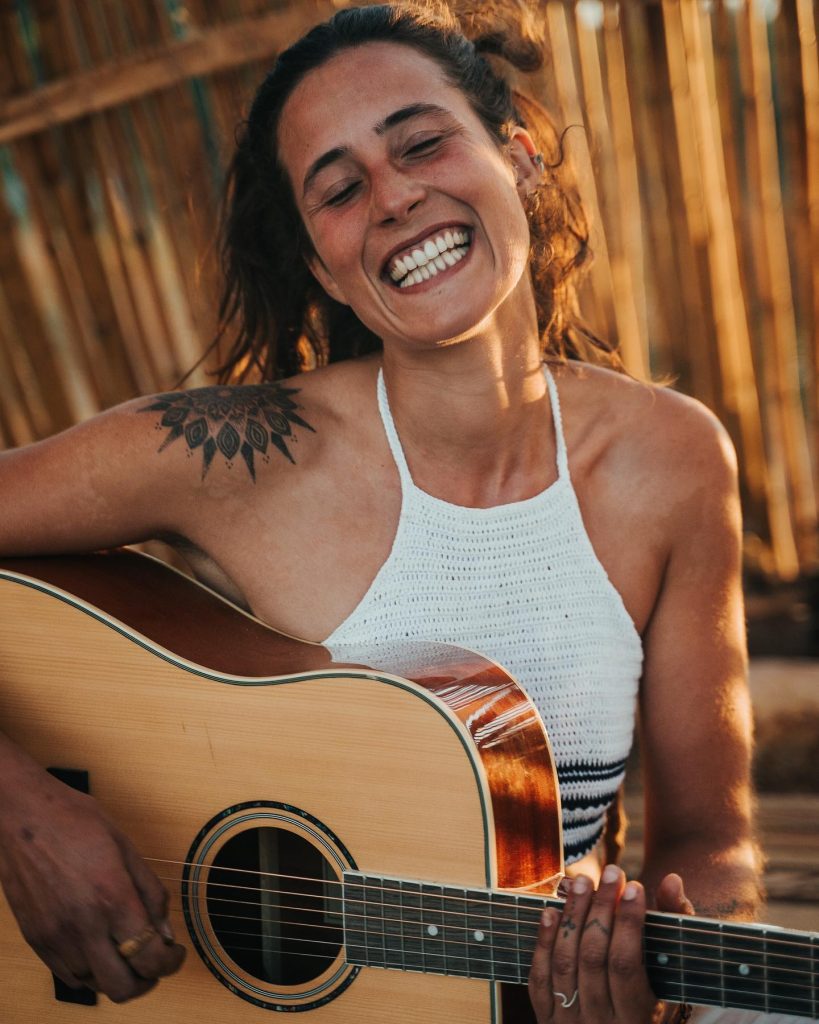
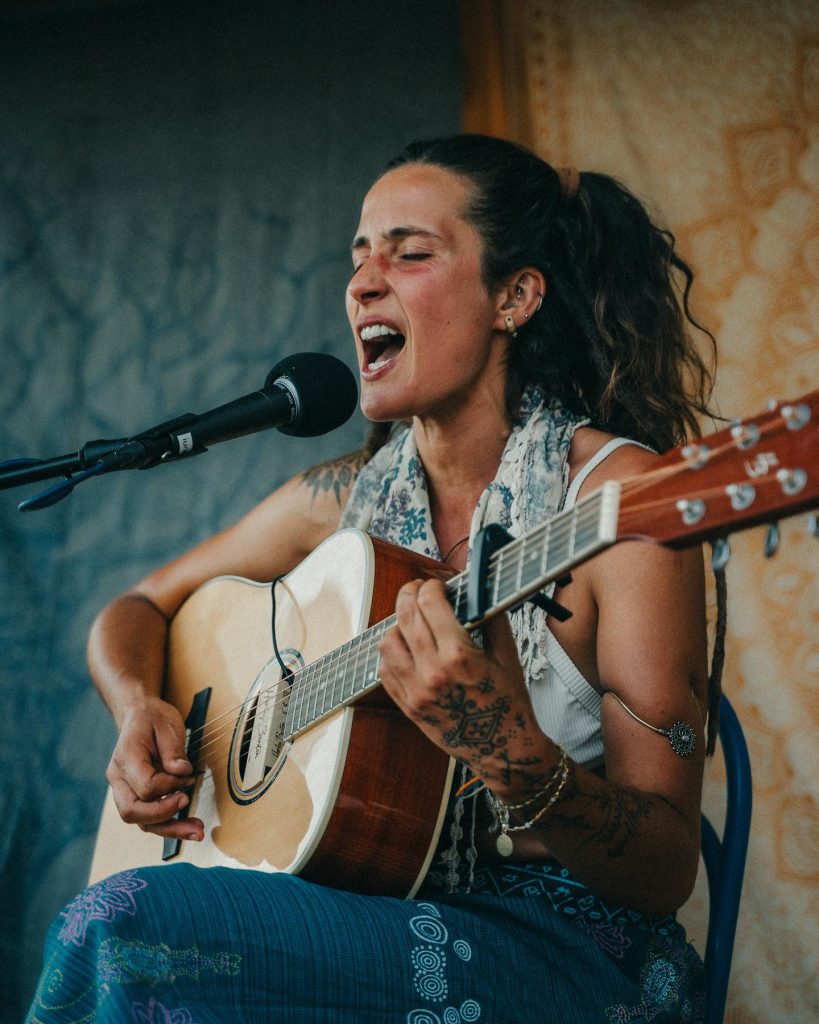
Daniela Martins, also known as Dalibri, was born in ’93 in Porto. Her journey started the day she was born. She began studying music and the art of breathing at the age of 7. In 2008, she started singing in prog rock/metal bands. By the age of 18, Daniela had already gained professional experience in communications and sales. Around the age of 20, she transitioned to the field of hospitality, holding various roles from receptionist and bartender to tour guide and restaurant manager. In one year, Daniela successfully launched four restaurants in Portugal for diverse clients.
Later, in her hometown, she connected with local environmental and social integration associations, guiding her on a profound journey of self-development. This transformative path led her to integrate faith and self-love, unveiling her true potential. In 2022, a new music project came to life, where Daniela shares songs exploring the emotional journey of self-discovery, guiding individuals to their authentic truth. With a fusion of medicine chants and agro-ballads, she plants seeds of love in every performance.
For years, Daniela has devoted herself to a Seva path, embodying compassion and selfless service. She developed a keen interest in creating spaces for sharing gifts and nurturing a vision of a peaceful Earth. Her festival journey began at Festival da Casa Bô in Amarante, Portugal, in 2016. Since then, she has actively contributed to various events and festivals. In 2021, Daniela became part of the HUMANIFEST team, a community festival entirely organized by volunteers. Expanding her involvement in 2022, she transformed Skanking Farmers’ parties into a festival and co-organized HIM DUB FEST, attracting over 1000 participants.
Where are you based, if there is such a place?
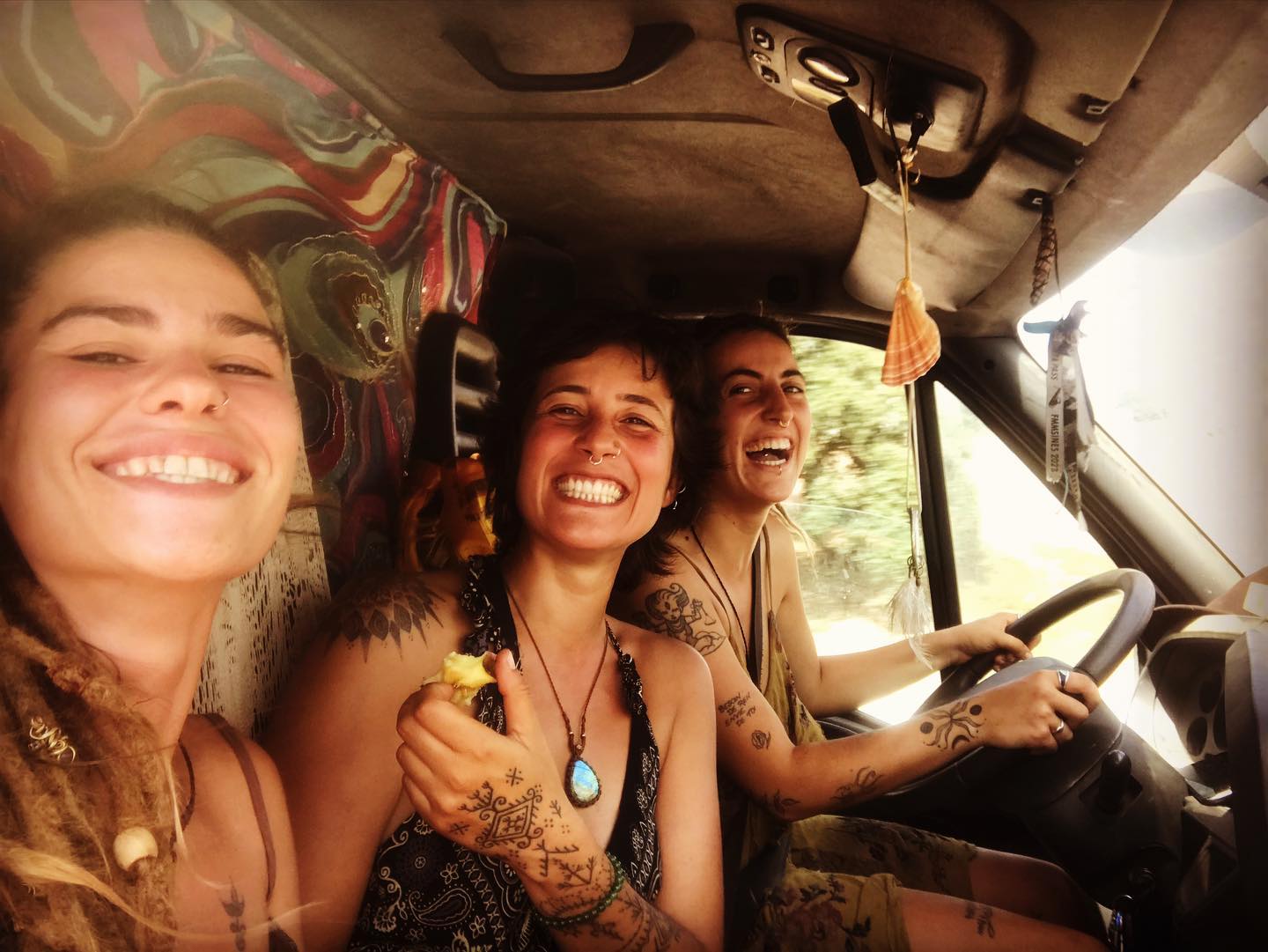
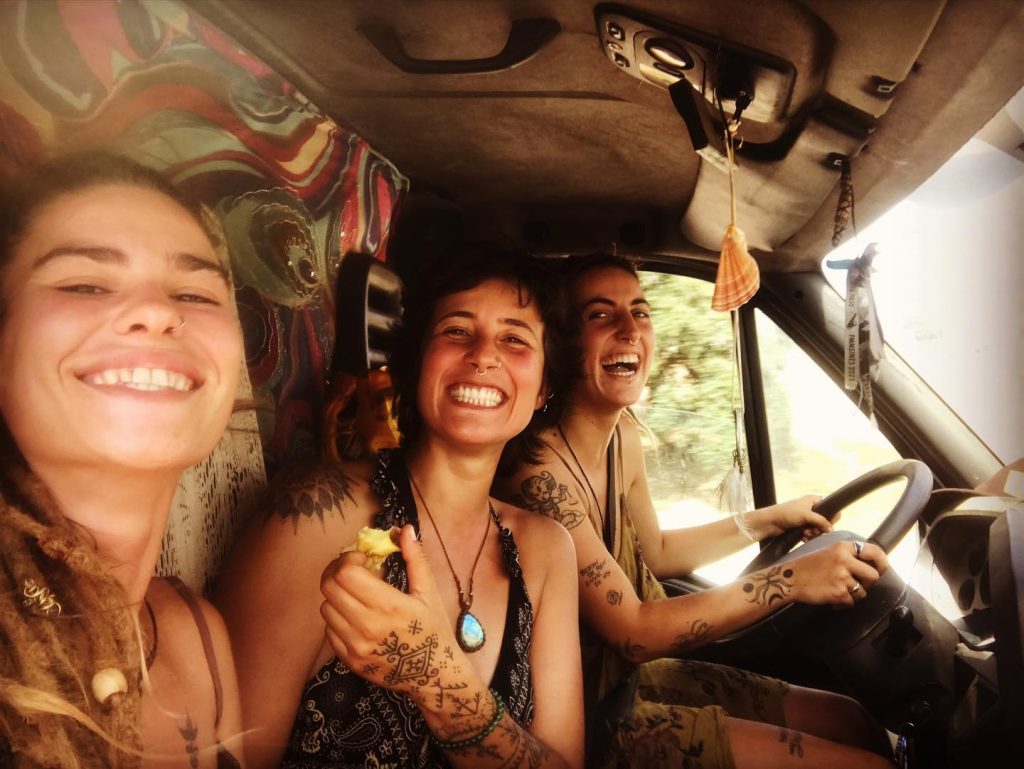
Right now, there isn’t. In 2020, I downsized my belongings from a two-bedroom house to fit into my van. Last year, I had to reduce them again because I felt like I still had too many things, and later on, I sold my van. The remaining items are stored in my mom’s house in the north of Portugal.
I don’t have a fixed base; I feel at home wherever I go. This sense of belonging comes from within. I believe home isn’t a place but a feeling. When I travel, I already know my basic needs. For example, when I’m on a retreat or sharing a space, I know how to set boundaries. For a couple of days or even a week, I focus on myself and try not to engage too much with other people. Or I focus on community tasks that make me feel ‘at home,’ like cooking.
What kind of work do you normally do during your travels?
My concept is that the place receiving me will determine my role. Currently, I’m dedicated to one project where my community skills, experience of living in different places, and musical and event management skills are most needed. However, in another location, my skills in housekeeping, gardening, or forest management might be more valuable. It all depends on the specific place.
How far in advance do you plan your travels? Do you have some kind of plan for the next few months, or do you prefer to decide spontaneously?
In my situation, there isn’t a prescribed way of doing things. For instance, during the summer, plans were well-established. Upon my return to Portugal in May, I already had activities scheduled for the summer, with one or two months of events planned. However, as autumn arrived, everything became more open-ended. Just today or yesterday, I managed to create a plan for the next 1-1.5 months, but until then, nothing was clear.
What’s important to note is that there’s no strict need for a plan; it doesn’t depend on planning. Commitment may arise if I see an opportunity I feel connected to. For example, once I met a guy who needed help with his project. I couldn’t go there right away, but I truly felt that I had to do it in the future. So, I committed for the upcoming month. This process can take some time, up to a few months. In the end, it’s okay even if it doesn’t work out. Everything falls into place once we know what we want. When I know what I want, the path opens up for me.
In the past one or two weeks, I was absolutely confused and blocked because I could only see one way—the way I created in my mind. It wasn’t flowing. During dark rainy days or moments of change, I couldn’t make a decision. And then suddenly, bam. When I was relaxed, and calm in my faith, and the light on the way started to appear, it became easier to make a decision.
When making decisions about where to go next, have you ever had the feeling that you’d like to settle down somewhere, at least for a while or a few months, or do you always feel the need to be on the road?
It’s deeply connected with my emotions. I carry a little trauma related to rejection and abandonment, so I tend to leave before I’m told to. There’s this inner fear of being sent away because it’s not truly my place—I don’t own it, and I don’t have a contract for it. Once I sense that my inner child starts fearing this possibility, I begin looking for new projects and new places.
When I’m balanced, I feel really good about myself and am content in the place where I am; this fear doesn’t arise. In these moments, I prefer to stay longer. I believe it’s important to root sometimes and just let things happen. In a way, it’s similar to staying with one person, for example, in a loving relationship. This is when we have the most chance to grow, to overcome our fears, and sometimes that hurts, right? I experienced that when I stayed for one year on one project. It was a real challenge: when I committed to staying, I wanted to overcome my fears. I need to stay in one place to be able to follow my routine. I like having a routine with defined tasks. However, it’s challenging to maintain this routine if I’m not grounded and emotionally stable. During such times, I tend to keep jumping from place to place. It depends on the season inside me.
Speaking of routine, could you describe a typical day in your life right now?
I dedicate the first three hours of my morning to myself, following Ayurveda tips for a daily routine—basic guidance on how to wake up, initial activities, and orientation. During this time, I engage in fundamental practices, including meditation, physical yoga, and an hour of prayer or puja—a ceremony at the altar. These three hours of silence are solely for myself, focusing on cleansing and awakening both the body and the mind. Following this, I concentrate on either music, gardening, or any other creative task. Afterward, I take a break for my first meal, usually around the peak of the sun when it is high in the sky. In the afternoon, I often practice yoga nidra, clean and organize my space, bringing beauty to where it’s needed. The last meal is around sunset, a few hours before bedtime. During these final hours, I prefer less active activities, such as reading or studying.
I find that being aligned with a routine makes it easier for me to break it. For example, if something comes up when I have scheduled my usual yoga time, I’m free to do it that one time. When I don’t have a routine, everything seems overwhelming. It’s always one task on top of another that can’t seem to find its place because everything appears a bit more chaotic in my mind.
What is the biggest disadvantage of your lifestyle?
I don’t believe there is a disadvantage, but it truly takes strength to recognize that this lifestyle is for my development. What I’m doing is for personal growth, placing myself in challenging situations to transform false beliefs I’ve held for years—beliefs that I’ve repeated to myself over and over again. All of this is an effort to let go of material possessions and these false beliefs, which often go hand in hand. The more we carry in our bags, the heavier the emotional burden we bear.
For me, this lifestyle is a path to transformation, and while it may be painful, I don’t view it as a disadvantage. Instead, I see it as another opportunity to find peace and an unlimited source of knowledge. This lifestyle gives me the chance to explore different cultures, ways of thinking, acting, and relating. This continually broadens my perspective and makes me more open to the world.
What is the biggest advantage of your lifestyle?
Challenging oneself is heart-opening; it liberates the mind and spirit. I come from a family rooted in a condition-restricted environment, where living ‘within the predetermined box’ was considered correct. Stepping outside of that box has been increasingly freeing. The biggest advantage lies in letting go of the preconceived lifestyle and embracing a full perspective of unlimited possibilities. I am not defined by what happened to me; I am the one responsible for what I choose to become. This saying, attributed to Carl Jung, deeply resonates with me.
Do you think your kind of lifestyle is for everyone, or are some people just not made for it?
I believe each person is unique and special. Some individuals require more structure and deeper roots than others, while others possess an energy that seeks expression and drives them to keep moving. Not everyone is naturally inclined to take the initiative; some prefer waiting until they are invited to participate in something. I consider myself very proactive. I decide what I want, and then I go for it. However, I understand that some people need guidelines to follow and benefit from others guiding them forward. So, I don’t believe a nomadic lifestyle is for everyone, but an alternative lifestyle of living in the countryside and creating a decentralized system — yes. I think we all have a place in this new way of community living.